Info in General

Sri Lanka is a land of great cultural diversity. Religions pervade many aspects of life and constitute a basic element of this diversity. Buddhist and Hindu temples, as well as Mosques and Catholic churches with their own colorful rituals, are the most readily visible features of the cultural landscape. Varying degrees of colonial impact, modernizing influences, and wealth and income add other shades to the cultural mosaic.
In architecture, sculpture, and painting, Sri Lanka’s traditions extend far back into antiquity. The remnants of ancient works restored and preserved at archaeological sites, while reflecting Indian influences, also bear testimony to the inspiration derived from Buddhism. Classical literature, too, presents a blend of stylistic influences from India with Buddhist themes. Since the beginning of the 20th century, with the literati being exposed to European literature, local creative writing has acquired greater diversity in style and has become more secular in content.
In the performing arts, there are several Sinhalese and Tamil folk traditions and a host of recent imports and imitations. Among the folk dance forms, for example, one finds the highly refined Kandyan dancing, which has been associated over several centuries with state ceremonies and religious rituals in and around the historic hill capital of Kandy. The more improvised “devil dancing” is performed at healing rites and exorcisms. In drama, modernized versions of folk theatre share the limelight with modern original works and adaptations from Western dramatists. Both Indian and Western influences are strongly apparent in the popular forms of music.
Buddhism

Buddhism is a religion and philosophy that developed from the teachings of the Buddha (Sanskrit: “Awakened One”- Only one man could achieve Buddhahood once in a multi-trillion years), a teacher who lived in northern India between the years 624 and 544 BCE (Before the Common Era). His teachings were vast and spread throughout India to Afghanistan, Central and to Southeast Asia including Sri Lanka, and into further east China, Korea, and Japan. Buddhism has played a centralized control in the spiritual, cultural, and social integration, and mainly influenced the political power control of Asia. And now with the beginning of the 20th century, Buddhism has been crossed to the West by self-understanding of the followers but not by force since the date of the first Dharma preaching of Buddha. Ancient Buddhist scripture and doctrine developed in several closely related literary languages of ancient India, especially Pali and Sanskrit.
The canon “Tripitaka” was written down for the first time at Matale Aluviharaya, Sri Lanka in the 1st century BCE, the Dipavamsa (chronicle) states that during the reign of King Walagambahu the Great of Anuradhapura (89–77 BCE). Traditionally the doctrine is passed on from Elder to novice by heart. The King was worried about constant south Indian attacks and uncontrollable famines, which threatened the teachings of Buddha. Therefore, he came to the decision to record the teachings on ola leaves.
The doctrine is divided into three; “Tripiṭaka” consisting of 32 books in three parts, Vinaya Piṭaka (“Discipline”), Sūtra Piṭaka (“Discourse”), and Abhidharma Piṭaka (“Special or Further Doctrine”)., the structure, the code of conduct and moral virtues in the Vinaya Pitak particularly have similarities to some of the surviving Dharmasutra texts of Hinduism.
The Lord Buddhas who was the founder of the Four Noble Truths comprise the essence of his teachings, though they leave much left unexplained. They are the truth of suffering, the truth of the cause of suffering, the truth of the end of suffering, and the truth of the path that leads to the end of suffering. More simply put, suffering exists; it has a cause; it has an end, and it has a cause to bring about its end. The notion of suffering is not intended to convey a negative worldview, but rather, a pragmatic perspective that deals with the world as it is, and attempts to rectify it. The concept of pleasure is not denied but acknowledged as fleeting. The pursuit of pleasure can only continue what is ultimately an unquenchable thirst. The same logic belies an understanding of happiness. In the end, only aging, sickness, and death are certain and unavoidable.
By Eranga Suneth Jayasinghe

Ref: Coppy from Buddhist Teaching books
Civilization

Sri Lanka has had a continuous record of human settlement for more than two millennia, and its civilization has been shaped largely by that of the Indian subcontinent. The island’s two major ethnic groups, the Sinhalese and the Tamils, and its two dominant religions, Buddhism and Hinduism, made their way to the island from India, and Indian influence pervaded such diverse fields as art, architecture, literature, music, medicine, and astronomy.
Despite its obvious affinities with India, Sri Lanka nevertheless developed a unique identity over the ages that ultimately set it apart from its neighbor. Cultural traits brought from India necessarily underwent independent growth and change in Sri Lanka, owing in part to the island’s physical separation from the subcontinent. Buddhism, for instance, virtually disappeared from India, but it continued to flourish in Sri Lanka, particularly among the Sinhalese. Moreover, the Sinhalese language, which grew out of Indo-Aryan dialects from the mainland, eventually became indigenous solely to Sri Lanka and developed its own literary tradition.
Also important to Sri Lanka’s cultural development has been its position as the nexus of important maritime trade routes between Europe, the Middle East, and Asia. Long before the European discovery of an oceanic route to India in the 15th century, Sri Lanka was known to Greek, Roman, Persian, Armenian, Arab, Malay, and Chinese sailors. With the coming of the Europeans, however, the strategic importance of Sri Lanka increased, and Western maritime powers fought to control its shores. Both Sri Lanka and India came under European influence and colonial rule. This common experience worked to tighten the long-standing links between the two countries, and with the attainment of independence in the mid-20th century, Sri Lankan and Indian social institutions and ideologies began to resonate more closely with each other.
Copied by Eranga Suneth Jayasinghe / from britannica.com
Prehistoric record
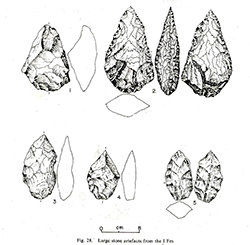
Geologically, Sri Lanka is an extension of peninsular India that separated from the mainland perhaps as recently as the Miocene Epoch (roughly 25 to 5 million years ago). Archaeological excavations undertaken since the late 20th century have indicated that the island already supported human inhabitants some 75,000 to 125,000 years ago. The earliest occupants of the region were, like other Paleolithic peoples, hunters and gatherers who made and used fairly rough stone tools. Finer tools made of quartz and occasionally chert become visible in the archaeological record about 28,000 years ago. The artifacts from this era, which include many microliths (very small, sharp flakes of stone that can be used individually or hafted together to make a serrated edge), have been found throughout the country, especially among the grasslands of the hills and the sandy tracts of the coast. By about the 9th century BCE, people had begun to experiment with food production and irrigation and had gained access to some of the iron tools produced on the continent.
Copied by Eranga Suneth Jayasinghe / from britannica.com
Early settlement and the spread of Buddhism
Early settlement
The earliest human settlers in Sri Lanka were likely peoples of the proto-Australoid group, perhaps akin to the indigenous hill peoples of southern India. Links with people from the Southeast Asian archipelago also are possible, however. Remnants of these early inhabitants were absorbed by the Indo-Aryans—or, more precisely, speakers of Indo-Aryan languages—who immigrated from northern India about the 5th century BCE and developed into Sinhalese. The Tamils were probably later immigrants from areas of central, eastern, and southern India where Dravidian languages were spoken; their early migrations spanned a period from about the 3rd century BCE to about 1200 CE.
Impact of Buddhist Culture on True History
Sri Lanka possesses a historical tradition preserved in written form by Buddhist chroniclers. The earliest of the extant chronicles is the Dipavamsa (“Island’s Chronicle”), compiled probably by Buddhist monks in the 4th century CE. The Dipavamsa was followed by the Mahavamsa (“Great Chronicle”) and its continuation, called the Culavamsa (“Little Chronicle”). Together, these chronicles constitute a literary record of the establishment and growth of Sinhalese political power and of Sri Lankan Buddhism; however, the documents must be used with caution and always in conjunction with archaeological—especially epigraphic—material.
Legendary origins
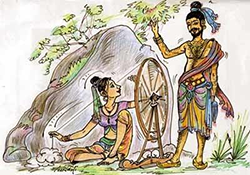
According to the Sinhalese tradition, as recorded in the Mahavamsa, the first Indian settlers in Sri Lanka were Prince Vijaya and his 700 followers, who landed on the west coast near Puttalam (5th century BCE). They had been banished for misconduct from the kingdom of Sinhapura in northern India by Vijaya’s father, King Sinhabahu, who put them all in a ship and drove them away. When Vijaya’s band landed on the island, it was inhabited by yakshas (a type of spirits, perhaps referring here to human members of a cult of yaksha devotees), whom they defeated and chased into the interior. Vijaya married a yaksha Queen and had two children by her. Later he drove her and the children away and sent to the Madurai court in India for a Pandu (probably referring to the Pandya dynasty) demanding a princess and for wives for his 700 followers. Vijaya settled down to reign as king after a ceremonial enthronement and marriage and founded a dynasty. He had no heir to the throne, and toward the end of his reign, he sent a request for his younger brother at Sinhapura. The brother, unwilling to leave his native land, sent his youngest son, Panduvasudeva, to Sri Lanka. Panduvasudeva landed with 32 followers at Gokanna (now Trincomalee) on the east coast. He was enthroned at Upatissagama and continued the Vijaya dynasty.
The controversy of Indo-Aryan settlement
The account of Sri Lanka’s settlement as presented in the Mahavamsa contains an element of historical fact—the settlers were Indo-Aryan peoples from northern India. However, controversy exists as to the exact provenance of the early settlers; the legends contain evidence pointing to both the northeastern and the northwestern parts of the Indo-Gangetic Plain. Vijaya’s ancestors hailed from Bengal, in the northeast, but his father established himself subsequently in Gujarat, the area in northwest India from which the adventurers were put out to sea. Before arriving in Sri Lanka, their ship was called at Supara, on the west coast of India. Their landing in Sri Lanka, at Tambapanni, near Puttalam, would indicate their arrival from western India. Some early tribal names occurring in Sri Lanka also suggest connections with northwestern India and the Indus River region.
While considerable evidence points to western India as the home of the first immigrants, it seems probable that a subsequent wave arrived from the vicinity of Bengal and Orissa in the northeast. One band of settlers landed in Sri Lanka at the east-coast port of Gokanna, a natural port of disembarkation for vessels arriving from the Bay of Bengal. The traditional accounts of the arrival of Panduvasudeva may portray the second wave of migration following the first mentioned in the Vijaya legend. Linguistic affinities between the early Sinhalese- and Prakrit-speaking peoples of eastern India strengthen the hypothesis of a migration from this area.
Copied by Eranga Suneth Jayasinghe / from britannica.com
Prehistoric Legend
While having Buddhist cultured history in hands ….***TO BE CONTINUED***