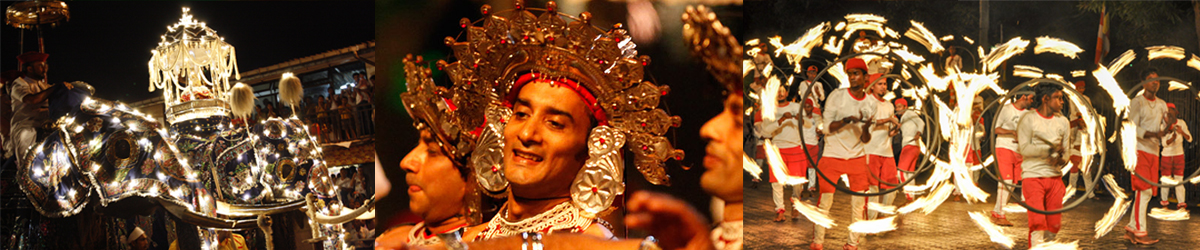
About Kandy
The Kandy is commonly known as “Maha Nuwara”, the hill capital was known earlier as Senkadagala Pura or Kanda Uda Rata (Country on the Hills). It is Sri Lanka’s second-largest city after Colombo, located in the central hills about 116 km northeast of Colombo at an altitude of 1551 ft / 473 m. The city is the administrative capital of the central province. Kandy is a historically important city with very high religious and cultural importance and it has been renowned around the globe as the most sacred city in the Buddhist world. It was the last capital of the Sinhalese King until it fell into the hands of the British in 1815 CE.
The city was first founded by King Wickramabahu III in the years between 1357-1374 CE while he was ruling the country from the neighboring city of Gampola (Kingdom of Gampola). However, Kandy becomes the last stronghold of Sinhalese after the end of the Kotte Period in 1597 CE. The City started to develop as a semi-independent Kingdom led by King Senasammatha Wikremabahu (1473-1511 CE) under the Kingdom of Kotte. Since then 14 Kings including a Queen had been ruled from the Kandy until 1815 CE. The last King of Kandy Sri Wickrama Rajasinghe was captured on 10th February 1815 by the English army with the help of locals. Kandyan convention signed between Sinhalese Chiefs and English Chiefs as British Ceylon on 10th March 1815.
Hill station remains the most sacred Buddhist site on the Island, perhaps the religious capital of the Buddhist world since it is the home to the Temple of Sacred Tooth Relic of Lord Gautama Buddha, the most venerated Buddhist shrine in the world. This historic sacred capital city was declared a Living World Heritage City by UNESCO in 1988, where it is home to many traditional families who are being continued to live in their traditional professions for earnings up to the present generation, such as drummers, dancers, craftsmen, various serviceman in Tooth Temple and many more of the group of a network of this socio-cultural context. And the most renowned cultural event being held in Kandy annually known to be one and only in the whole world is the Esala Perahera Festival in the month of July bringing the stake of world heritage as a centuries-old traditional ritual.
The plateau is completely protected by natural barriers, surrounded by tall mountains, the largest river, and very steep cliffs. The milled climate, spectacular sceneries, historically important sites, craftsman shops, easy access to many adventurous walks, natural beauty, and cultural events of Kandy hold the interest of many travelers. Kandy is a city that anyone should visit at least one time during their visit to Sri Lanka.
By Eranga Suneth Jayasinghe
Where to visit in Kandy
Sacred Temple of The Tooth Relic of Lord Buddha – ශී්ර දළදා මාළිගාව
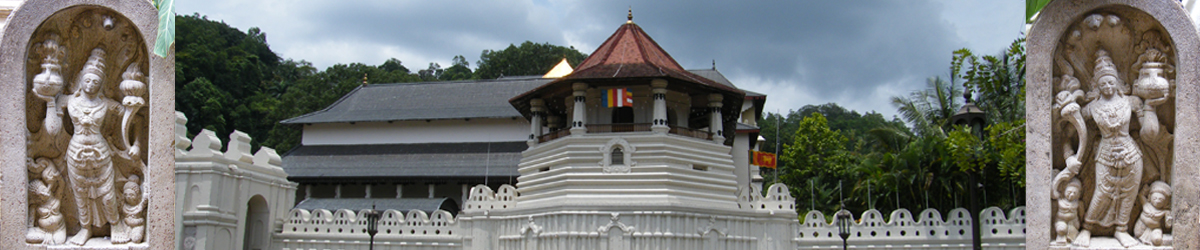
** The story will be to coming up soon
HISTORY OF THE SACRED TOOTH
Tooth Relic in India
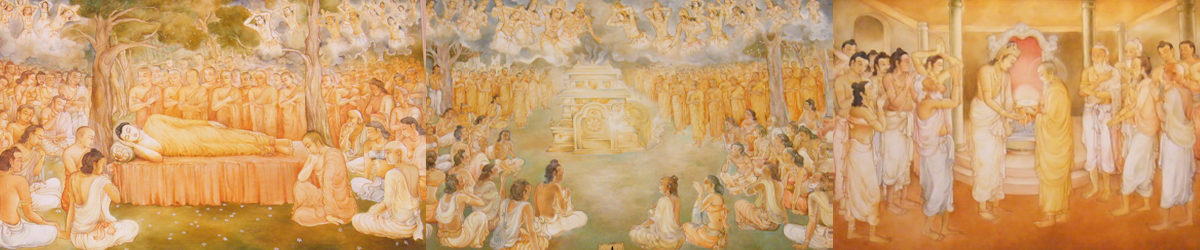
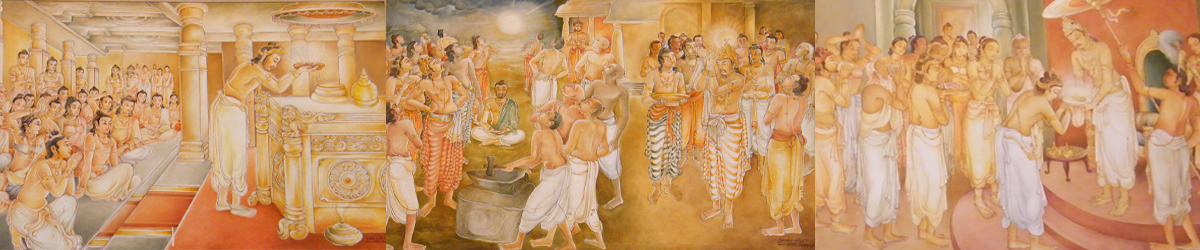
The Lord Gauthama Buddha passed into Nibbana in the year 544 BCE, his body was cremated in a specially-made sandalwood pyre. From the funerary ashes, an Arahath monk “Kema” obtains the left upper canine tooth as a Relic and presented it to King Brahmadatta of Kalinga in Eastern India to venerate the Tooth Relic with great honor. He, the King made a new temple and originated veneration with the highest honor to the Relic, and continue to do these daily honors and homage up to a few generations until the Pandyan Empire come into power. The Emperor was misled by the cowardly fooled sinners who believing supreme freedom through theism. They incited Emperor to destroy the tooth relic, in agony to become advice to the royals. The Emperor ordered bringing the Relic to himself and sent a message to King Guvasiva in Kalinga. The tooth relic was brought to the Empire, and by order tried five ways to destroy the Relic. At last hammered on an anvil, the tooth was sunk into the anvil. Nobody could take the relic out of it. Then the emperor proclaimed a reward for the person who could take the Relic out of the anvil. The nobleman Subhadda turned up and made a vow and then by his vow Relic was spring up to very high in the sky and brightened like a star. Emperor converted to Buddhism after seeing the miracle in front of him and handed over the Relic back to the King Guvasiva of Kalinga. The King returned to Kalinga with the Relic and choose his son-in-law Sudhantha Dantha as the new guardian for the Relic. Time passed on and threats to the Tooth Relic have not been stopped. The King decided to smuggle Tooth Relic to his friend, King Mahasen in Sri Lanka with the provision of a new enemy invation for the tooth relic, he sets his daughter Hemamala and her affiance Dantha to flee away from the country Kalinga to Sri Lanka.
Anuradhapura Period and the Tooth Relic
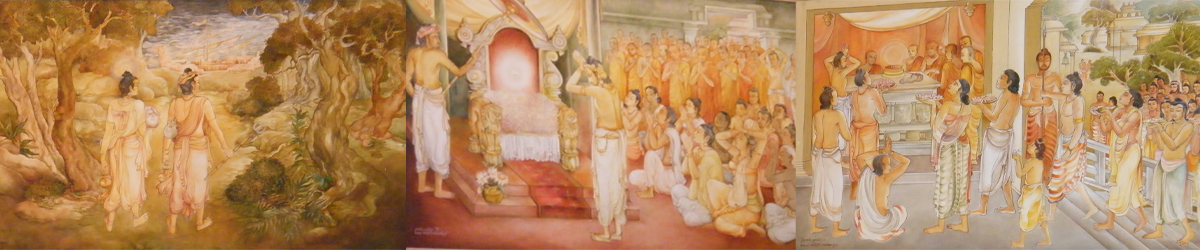
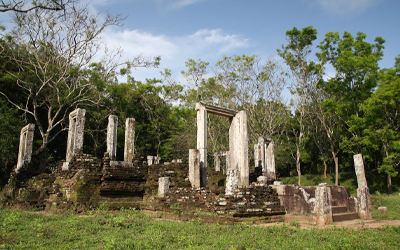
It was a very hard exhausting long journey, had to face many threats & fears on their way to Sri Lanka, even though it was a painful journey both were emotively enthusiastic until meeting King Mahasen they expecting. After ending a years-long journey, they arrived in Anuradhapura but King Mahasen was not alive, and his son King Kirthi Sri Magawanna (301-328 CE) was the ruler of Sri Lanka in his ninth regnal year (310-311 CE). He is the 52nd King of the Anuradhapura Kingdom. Hearing the sad news of King Mahasen’s death couple was brokenhearted but later become comfortable having known that Mahasen’s son is the new King. Also, they became aware of the chief monk (Mahatero) of Megagiri Viharaya (Present Isurumuniya Temple) who was a close friend of the King. The couple visited the temple to introduce themselves and handed over the Tooth Relic. Mahatero was delighted, welcoming the couple with great pleasure, Ven. Tero places the Tooth Relic in the most suitable place in his temple. Later sent a message to the king through another monk of the temple informing the great news of the arrival of the Tooth Relic. King soon visited the temple, he was amazingly delighted by seeing the Tooth Relic, immediately reacted, and took all the responsibilities to pay homage and protect the Relic with royal patronage. And the King offered or scarify the whole of Lanka to the Tooth Relic. It was a significant political decision taken by the King to honor the Tooth Relic as the symbolic icon of the Government forever since.
It is explained in historic records, that he built a beautiful two-story palace (Dalada Maligawa/ Dhammakchakkageha) in Jothi grove near the Royal palace to enthrone the Tooth Relic in Anuradhapura City. He organized to start daily offerings to pay homage to the Buddha. To share this happiness and to honor the Relic he called a public exhibit of the Tooth Relic spending 900,000 gold coins. Also, he has started an annual festival organizing a bright blissful procession (Perahera) to carry the Tooth Relic from the Tooth temple to Abayagiriya Viharaya once every year for the public to witness & pay homage. (re-confirm the Mahawamsa records by Chinese Monk Fa-Hsien’s book). As years went by, these offerings became a traditional ritual of the Tooth Relic. All Kings of Anuradhapura continue these rituals until the end of the Anuradhapura Period for over seven centuries with the patronage of about 60 Kings including great patron Kings like Jettatissa, Buddhadasa, Dhatusena Sena, Mahinda &, etc. And the Buddhist monks who took the responsibility of security of the Tooth Relic acted as protector guardians of the Tooth Relic, taking the Relic away from danger when in the occasions of south Indian invasions and local political disorders.
Tooth Relic in Polonnaruwa

Anuradhapura collapsed, and there isn’t much evidence found about paying homage to the Tooth Relic in the final years of the Anuradhapura Kingdom, the Tooth Relic safely stayed in Ruhuna (south of the Island) until Vijayabahu I (1070 -1110) became the warrior, King of Polonnaruwa, beating a 77 years foreign rule of the country (Chola Empire). Soon he made a new costly Tooth Relic Temple “Atadhage” in Polonnaruwa. Now again, the Tooth Relic emerges in the historical records of Buddhist literature. The King re-call to do the traditional rituals to pay maximum homage and appointed special armed forces of Tamil Velaikkara soldiers for the security of the Temple. He ruled the country for 55 years until his death. After his death Tooth Relic was in danger again due to political uncertainty until King Parakramabahu I the great (1153 -1186) was crowned in Polonnaruwa, and Tooth Relic was back in Polonnaruwa. Trust that the present temple in ruined ” Watadhage” was specially designed to enthrone the Tooth Relic. After the death of Parakramabahu I the great, continue the Relic in Polonnaruwa until the period of King Nissankamalla (1187-1196). It says that he paid great homage to the Tooth Relic in his reign, Nissankamalla enthroned the Tooth Relic in a brand-new Tooth Relic palace, known as “Hatadhage” which is also ruined today. The glory of Polonnaruwa turned into silence after the death of King Nissankamalla. Slaying each other for the throne led to a total collapse and opening gateways to the invader prince Maga from Kalinga. Tooth Relic had been gone unknown until the next era.
Tooth Relic in Dambadeniya
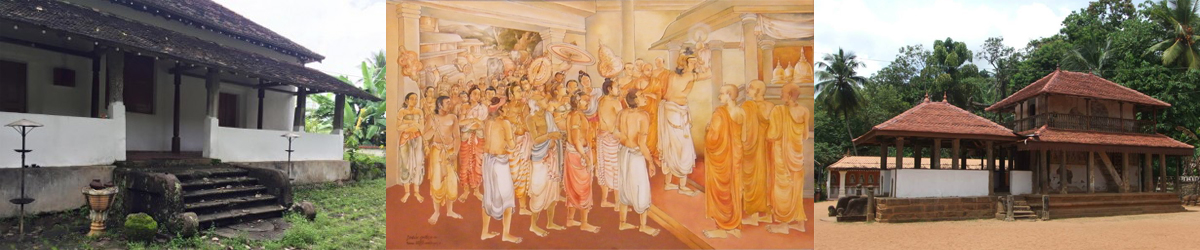
The chronicle was silent about the Tooth Relic but secretly move the Tooth Relic and the Bowl Relic from Polonnaruwa to a safer place in Maya Rata (southwest region) by a monk who may be the protector guardian of the Relic house in Polonnaruwa, clearly indicating that the Tooth Relic and Bowl Relic buried carefully in the earth to protect them in the mountains of Kotmale (Chronicle Chulavamsa-noted from related books).
A patriot of pure Sinhalese Royal blood turned up in the battle of the crown of the island. He was crowned in Dambadeniya, known as Vijayabahu III in 1220 CE. Soon, the King got to know the place where the Tooth Relic was hidden by a monk. King himself went there with a very large army to take the Bowl Relic & the Tooth Relic. They performed a festival there to bring back Relics to Dambadeniya in a grand procession. All the people in the country once again in great happiness to see the Tooth Relic, respectfully venerate and to pay the heartiest honors and homage. They organized a grand splendid festival of welcoming the relic to the new Capital. After then the King organized daily festivals offering honor to the Buddha.
King Vijayabahu III (1220-1236) built a grand palace with three-story to enthrone the Tooth Relic far away from the Capital Damabadeniya in Beligala, Kegalle district. The decision may have been taken to safeguard the Tooth Relic from sudden invasions. It says that the temple complex had a divine park including water gardens, bathing ponds, and many more buildings deploying military guards for the protection of the Tooth Relic and the devotees. And more importantly, the regular offerings and rituals start again under the orders of the King.
Kind died in 1236, successor his son crowned by the name Parakramabahu II (1236-1270). No sooner after the accession, he builds an incredibly beautiful new three-story Palace in the vicinity of his palace to enthrone the Tooth Relic in Dambadeniya Capital city (Temple known as Wijayasundararama, still existing in somewhat good condition). There had been found numerous literary records, some are contemporary records, about how he paid homage to the Tooth Relic almost every day in his life and held many festivals more than ever found in earlier times by other kings. And he triumphs over Kalinga Maga’s rule in Polonnaruwa. Also, defeated Chandrabhanu, an invader King of Tambralinga’s (Java), who took two attempts to conquer Sri Lanka demanding the Tooth Relic for himself in the years 1244 – 45. However, Chandrabhanu managed to secure the Tamil throne of the Jaffna Kingdom until around 1255 CE, when he was killed by the Pandya King who intervenes in the battle of his second attempt to conquer Sri Lanka between 1262-1264 CE. While all these happenings were around, the King reconstructed the Tooth Relic temple in Polonnaruwa to take the Tooth Relic to Polonnaruwa for a religious festival organized. His elder son, later successor as the King Viajayabahu IV (1270-1272) also supports his father’s meritorious work to carry the Tooth Relic in a procession to Polonnaruwa, and he himself has continued to do numerous meritorious deeds to honor the Tooth Relic. Chronicle says that Vijayabahu IV was assassinated in his second year on the throne by a general, but has not insisted on any other facts about what really happened in his period. Although not sure if the Tooth Relic was brought back to Dambadeniya during his period from Polonnaruwa. Seems that general took control unlawfully.
Tooth Relic in Yapahuwa
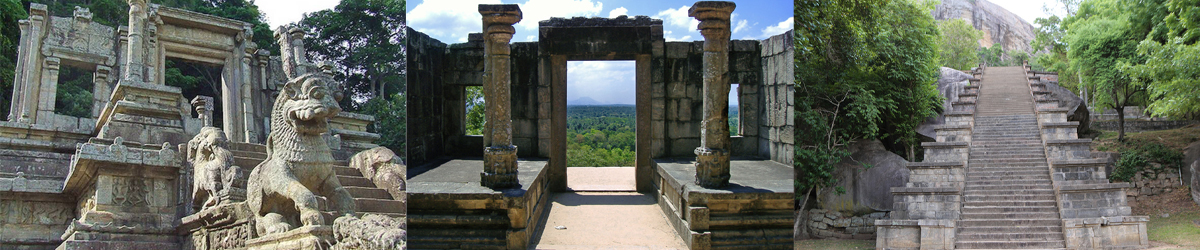
Bhuvenakabahu, the younger brother of Viajayabahu IV succeeded in escaping. He regains the throne killing the general in a later year. He was crowned as Bhuvenakabahu I in the year probably around 1274 CE. And after he continues to rule from Dambadeniya for a short period. Later he founded Yapahuwa as his Capital. Bhuvenakabahu I has been credited in many chronicles in numerous ways for his meritorious works offered for Tooth Relic. Also, now the missing information about Tooth Relic emerges again, the history book explains that Tooth Relic has brought to the new Capital Yapahuwa from Polonnaruwa. It seems Tooth Relic had stayed in Polonnaruwa until the end of all the political instability in Dambadeniya. He built an incredibly beautiful Tooth Relic Temple in Yapahuwa and enthrone the Tooth Relic and the Bowl Relic there in his new capital. King Bhuwanekabahu I ruled from Yapahuwa for 11 years. According to the historic records, soon after King’s death, there was a famine and over this critical situation the south Indian Pandya invasion led by the Arya Chakravarti messed up state control upside down. Senior Archaeologist professor Senarth Paranavithana and some other scholars had been considering a plausible interregnum between 1285 CE till 1293 CE. However, some scholars’ opinion is that believing it may have been ruled by the Son of Chandrabhanu “Savakanmaindan” in that particular period who inherited the Jaffna Throne after Killing his father by the Pandya King in 1264 CE.
Tooth Relic Back in India and Brought back to Polonnaruwa
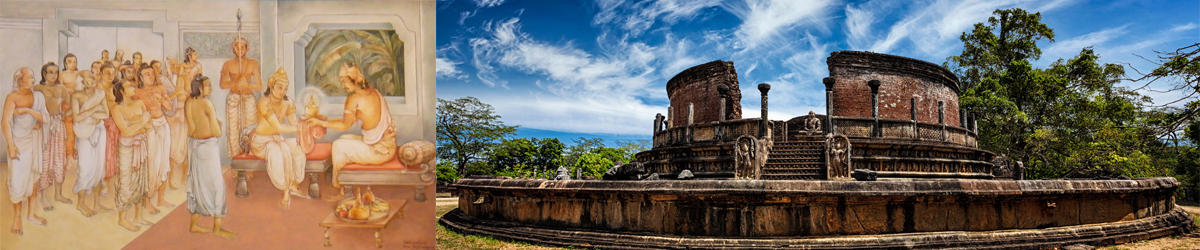
Ever since Tooth Relic was brought to Sri Lanka, taken back to India from a successive attack by a south Indian invader, possibly after the death of King Bhuwanakabhahu I in the year 1286 CE. The leader of the army, Arya Chakravarti took the Tooth Relic to India and handed it over to Pandya King Kulasekhara. The Tooth Relic was with Pandya King Kulasekara until recovered back by King Parakramabahu III (Son of Vijayabahu IV) in 1293 CE. The King had a great relationship with Pandya King Kulasekara and was able to win him through diplomatic relations to get back the Tooth Relic. He returned with Tooth Relic, and choose Polonnaruwa as his capital to re-enshrine the Tooth Relic in the old Tooth Relic Temple in the city. He continued the daily rituals, veneration, and homage to the Tooth Relic until his death.
Tooth Relic in Kurunegala
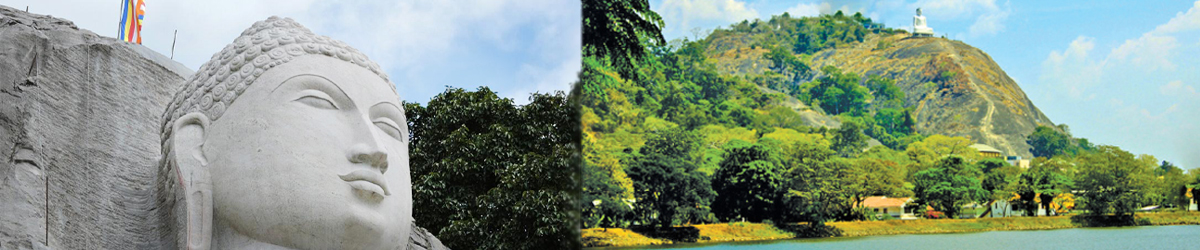
It is difficult to find clear details about the period, suspecting that the cousin brother of Parakramabahu III, who was the son of Bhuwanakabahu I was slain King Parakramabahu III for the throne, and crowned as King Bhuwanekabahu II in 1293 CE. He has chosen Kurunegala as his capital city. Brought the Tooth Relic to a newly built shrine in Kurunegala. Succeeded by his son Parakramabahu IV in 1302 CE, he built a magnificent three-story Tooth Relic Temple in Kurunegala where the ruins can be seen in the royal palace complex archaeological site in Kurunegala. He ruled till 1326 leaving behind many good merits including rituals conducted with Tooth Relic in a systemic manner as recorded in the text “Dalada Sirita”. And after him, 3 kings ruled from Kurunegala until 1341 CE, namely in order Bhuvenakabahu III, Vijayabahu V, and Bhuvenakabahu IV. Tooth Relic stayed in Kurunegala till the Kurunegala period ends.
Tooth Relic in New Capital Gampola
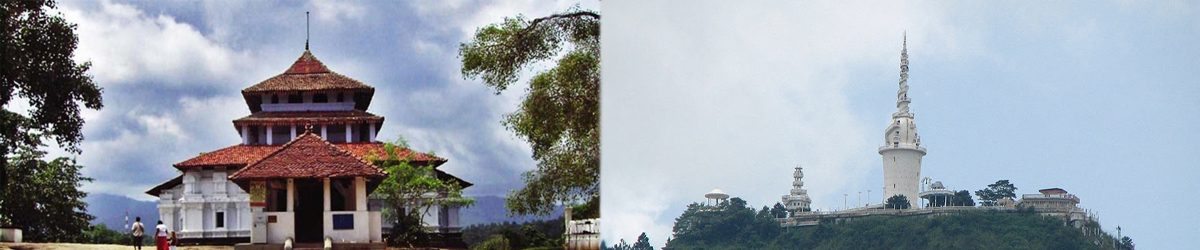
With fallen of the Polonnaruwa period, it turns into the downfall of Sinhalese power and unity, it is clear that there were many Kings ruling different parts of the island in the 14th century. In the years between 1341 & 1351 CE, Arya Chakravarti who was ruling north of the island then launched an attack on the Sinhalese Kingdom where King Bhuwenakabahu IV had to move away from Kurunegala. According to records, He was the founder of Gampola, after him, a short period ruled by King Parakramabahu V (1281-1359) who came from Dadigama in the Kegalle district. And after, he was succeeded by King Wikramabahu III (1357 – 1374), who bring the Tooth Relic to Gampola and enshrined it in the “Niyagampaya Temple” and continue to do the meritorious rituals and venerations of the Tooth Relic and Bowl Relic notably as kept in records in historic literature. The last King of Gampola was Bhuvenakabahu V (1372-1408). He was a great patron of Tooth Relic, Chulavamsa commends his good deeds and regular offering to the Tooth Relic to admire the Kings’ meritorious works.
*[The chronicle Chulavamsa silent again for about half a century ignoring notes about Tooth Relic until The Bhuvanekabahu V. However, evidence found in Simhala Dalada Vamsaya that Tooth Relic was moved to the New Capital Gampola under the custody of King Wikremabahu III]
Tooth Relic in Kotte (Jayawardenapura Kotte)
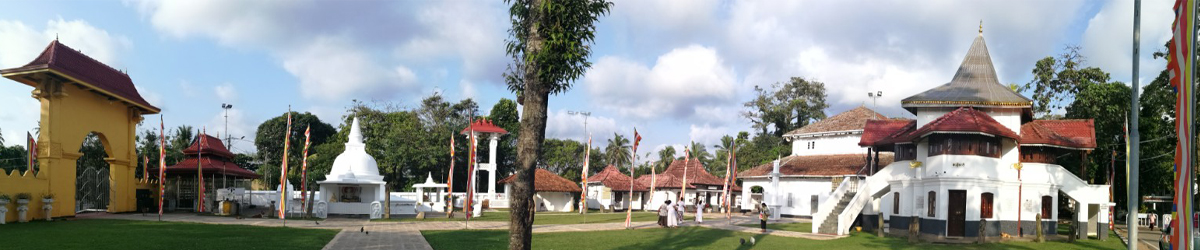
Kotte; which literally means fortress, was founded by a minister of the King Wikeramabu III of Gampola during his reign. Who, the minister was from a prominent south Indian Malayali family known as Alakesvara, apparently minister Nissanka Alakesvara seems to have had a predominant position in the political arena in the time of Wikremabahu III who, then made this fortress, especially against the Jaffna Kingdom of Arya Chakravarti., However, the drams seem to have begun a checkmate battle to corner the Sinhalese King. After the death of Nissanka Alakesvara, the family turns into rivalry with each other to seek supremacy. His brother Vira Alakesvara was acting as a regional king from “Raigama” in the southwestern region near Horana in Kalutara district. He was then defeated by his younger brother Virabahu, who was also the brother-in-law of King Bhuvenakabahu V (*Now Malayalees entering into the local royal family) who was the King after Wikremabahu III. At the time, he fled to South India and continued to have a complex battle between them until the Chinese emperor was involved to remove the tyrant ruler Vira Alakesvara who return to the battle after staying in India for some years. Chinese mission led by Cheng-Ho took Vira Alakesvara to China after an intensive battle against him in the western region (Maya or Malayarata) of Sri Lanka.

None of them were known to be the patron of the Tooth Relic and there was a long silence in the chronicle during this complex period, having no idea of the Tooth Relic. Chinese mission ended up with a replica of the Tooth Relic to China.
There, start stories again in the Chulavamsa about the Tooth Relic soon after the accession of the throne in Kotte by King Parakramabahu VI (1412-1467), the 3rd son of Chandrabanu of Yapapatuna. He was credited in numerous ways for respecting, veneration, and re-organizing the traditional rituals of the Tooth Relic with great honor, and his long 55 years of victorious Kingship records that he united the country again under one flag defeating the Jaffna & Vanni Kingdoms in 1450 CE for the first time after a few centuries.
It seems that he built a luxurious three-story palace to enthrone the Sacred Tooth Relic in Kotte and continue to do the daily and annual rituals similarly that have been honored by previous Great Kings. He made a Buddhist temple in Papiliyana to honor his mother’s name Sunethra Devi and restored the Saman Devala in Rathnapura too. His reign was known to have a full of prosperity and peace for the people of the country in recent history ever. This king’s period had been recorded in history as a great outburst of Sinhalese literature, which those poetries are regarded as countries highest ever.
After the king’s death succeeded him Jayavira Parakramabahu or Jayabahu (son of Kings’ Daughter) for 2 years. After King’s adopted son “Sapumal Kumaraya alias Chempaka Perumal turned into the throne as Bhuvanakabahu VI reigned till 1478 CE in Kotte. In this period Tooth Relic was paid homage by devotees even from Burma. After him, his son was crowned as Pandith Parakramabahu VII who could have probably reigned for 4 years where his uncle “Ambulugala Raja” slain him and took the throne and became King of Kotte as Vira Parakaramabahu VIII, reigned until 1509. After the death of Parakramabahu VI, once again the local political instability has begun to dispute among the aristocrats, leading to established regional kingdoms alongside Kandy and Sithawaka including the earlier kingdom of Raigama.
** To be continued
Other main sites in Kandy
World Buddhist Museum
Queen’s Villa (Mada Wasala)
National Museum
Old Royal Palace
Queens Bath
Peradeniya Botanical Gardens
Gadaladeniya Temple
Lanka Thilaka Rajamaha Viharaya
Degaldoruwa Rajamaha Viharaya
Udawatta Kalle sanctuary