
Anuradhapura district is in the dry zone of the island, located in the North Central Province of the country. The average temperature is about 30 C° throughout, with humidity ranging from 72% at a wind speed of 8 km/h. The city is situated 200km north of Colombo. And the distance from Kandy City is 136km north, from Dambulla 64km north, Polonnaruwa 104km northeast, and Jaffna 196km south.
Today, it is the Capital City of North Central Province and the biggest city in northern Sri Lanka. Anuradhapura district covers an area of 7,179 km² at an elevation of 81m, generally flat land and some mountains scattered in and around like the famous Mihintale, Galkulama, Mahakandarawa, Ritigala, and a few other hills. Those hills may help to diversify the local ecological system. The main natural water sources in the area are from the northeast monsoonal rainfall, which averages 1500 mm between December to February. And the other source is Malwathu Oya (the second-longest river on the Island) and a few tributaries, 164 km long river starts from the springs of Inamaluwa mountains of Matale district and flows through the Anuradhapura up to the Gulf of Manna to meet the Palk Strait. Also, the Anuradhapura is full of ancient manmade reservoirs, tanks, and canals including the mighty Yoda Ella (Jaya Ganga) making sure, enough water is throughout. The city was properly planned with all needs to meet the ancient agricultural civilization and to balance the mental health of its people. Having found these ruined mighty Buddhist temples, monasteries, and others, the city was named the “Sacred City of Anuradhapura” as a world heritage by UNESCO in 1982.
The ancient capital of Sri Lanka has founded by King Pandukabhaya in the year 377 BCE. He was crowned in Upathissa Gama, where was the capital city of his great uncle King Abhaya in the 5th century BCE. King Pandukabhaya reigned between the years of 437 – 367 BCE until his death. He has been regarded as the first great King of Lanka whose legends are still been honored as the father of the nation. His monarchy continued for 3 generations until the year 205 BCE.
King Mutasiva is the elder son of the 10 sons of King Pandukabhaya, he ruled for 60 years until the year 307 BCE. Followed by his son King Devanampiyatissa for 40 years until the year 267 BCE, followed by his brother King Uttiya for 10 years, and succeeded by another brother King Mahasiva for 10 years until the year 247 BCE. And then King Suratissa, the youngest son of King Pandukabhaya ruled for 10 years until he was defeated in a battle in 237 BCE by Sena & Guttika, two south Indian horse traders who conquered the Anuradhapura kingdom and killed the King. They ruled for 22 years and it was recorded as the first south Indian invasion. After ending their rule, the youngest son of Mutasiva, King Asela ruled for 10 years. However, he failed to resist the second attack of the south Indian Cola Empire Elara in that year in 205 BCE, ending the glory of the Pandukabhaya royal family.
Buddhism was introduced for the second time on the Full Moon day of June in the year 306 BCE during the reign of King Devanampiyatissa 307-267 BCE. He is the most famous grandson of King Pandukabhaya and could be listed at a higher rank on the list of greatest Kings in local history. The Story of Anuradhapura and the vision of the nation gave a new birth embracing the newest philosophy introduced, and the King transformed the country into a Buddhist state commencing Buddhism as the official religion of the country.
Contemporary Indian Mauryan Empire Ashok was on his mission in missionary work of Buddhism. He embraced Buddhism due to his strong depression after having seen those deaths and the destruction of his successful fierce battle of Kalinga. He sent his Arahath (Enlighted) son Mahinda Thero (Monk) to meet and greet the King of Lanka in return for the gift of the precious stone received from King Devanampiyatissa. At the first Dhamma sermon the King and all his people converted to Buddhism. The King donated his pleasure garden Mahamega Forest to build the Mahaviharaya (the big temple), later known as Mahamevuna Uyana. Many of the Kings’ family members, ministers, and their families became monks and nuns including the Queen. The city had been planned and designed to meet the need of the people who were in search of enlightenment. The capital city Anuradhapura turned into a sacred home to Buddhists around the world.
Anuradhapura, the sacred capital has been developed gradually and continued to be the Capital for a few more centuries until the year 1017 CE of the 11th century, probably making a world record for being a capital for such a long period of 1394 years.
Now, the city was under the rule of foreign invader Elara for 44 years until the warrior Prince Dutugemunu emerged from the south of the Island. It is said that it was the bloodiest war in Sri Lanka’s history, the prince defeated the invader King Elara and unite the country as one again. King Dutugemunu The Great, reigned from 161 to 137 BCE. And after, his brother King Saddatissa and his 3 elder sons out of four sons continue to rule from Anuradhapura until 103 BCE for nearly 34 years. The kings’ names by the Kingship are Prince Thulaththana, Prince Lajjathissa, and Prince Naga (Ballata Naga). A political coup had been in operation behind the arena, Mahatero of Mahavihara crowned prince Thulaththana avoiding prince Lajjatissa who was rightful by law. However, Lajjatissa took back his thrown fight against his younger brother Thulaththana. But yet the plan was in action during the Kingship of prince Naga. General Maharaththaka killed the King and became an unlawful ruler for a short period until the real hero come forward, the youngest son or the Fourth Son of King Saddatissa Prince “Wattagamini Abaya (Walagambahu I)” This prince had to face many difficulties to keep the country safe.
He killed the General in a battle. Then about five to six months after his ascension to the throne there was a sudden foreign attack and a local enemy “Thira” brahamin became rebelled against the King in the years around 103 BCE. Prince lost in a battle against the Tamil group and fled from Anuradhapura. While in hiding he organized a well-planned battle against the enemies. He set local enemies to fight against the invader group. Five south Indian Tamil Chiefs with their huge army took control and looted people and the city for 14 years. Walagambahu fought back and killed the last ruler in the year 89 BCE, and ruled until 77 BCE. The Great King leave his glory forever from Anuradhapura.
King Walagambahu passed the throne to his adopted nephew son Prince Mahakuli Mahatissa [( son of King Ballata Naga) (77-63 BCE)]and after, son of Walagamba Mahanaga (63-51 BCE / Choranaga-Nick name due to his foolishness to destroy 18 temples when rebel against Mahakuli’s rule) was poisoned him by his consort Queen Anula. And then King Buddhatissa (51-48 BCE / son of Mahakuli Mahatissa) was also poisoned by queen Anula and she played with a few more working-class men as her consort to full fill her eagerness to unite with them, and all became King for a short time until poisoned by Anula. Siva, Watuka, Tissa, and Niliya are some of them whom she slept with insulting all women, as to the way written in history books. Finally, she sat on the throne as the first Queen of history and ruled for the last 4 months within her pleasurably spend years between 48 to 44 BCE. Kutakannatisaa, the 2nd son of Mahakuli Mahatissa became King in 44 BCE removing Queen Anula, and ruled until 22 BCE. After all complications & corruption, it seems a peaceful period continued with economic, and socio-cultural growth patronage by the Kings in line Bathikabaya (22 BC – 7 CE) and Mahadhatika Mahanaga (7-19 CE). Also, noted some diplomatic connections between Rome during the time of trading with the west. Following the King his son, Amandhagami Abaya 9 years after his younger brother Kanirajunutissa (He slain his brother) ruled for 3 years. Next, continue the family, Chualabaya son of Amandhagamini Abaya, after Chulabaya’s sister Sivali and after Ilanaga nephew of Amandhagamini became the King. He had to fight against the unlawful act of clan Lambakarna who had the administrative power of royals and known to be the clan associated with the transportation Bodhi Tree to Lanka. They gave a try to steal the throne but King Ilanaga taught them a good lesson killing many and cutting some’s noses and toes. The King ruled until 43 CE. His son Chandramukasiva reigned until 52 CE, followed by his brother Yasalalakatissa reigned until he was slain in 60 CE by his gate watchman Suba. Yasalalakatissa played fools trusting his guard who look alike him switching positions for amusement and laughter. But the guard took the chance and became the King and ruled for 6 years by the name of Subaraja until Lambakarna gain the power of the throne. Here ends the throne of the Mauryan Dynasty of Vijaya Clan in the year 66 CE. *(Maryan Prince Vijaya, north Indian invader and the Great Grandfather of Pandukabhaya, the dynasty ruled in power for 609 years, ruled by 37 Kings including 2 Queens)
Emerge of Lambakarna Dynasty; seized the political power killing Subaraja in a battle. The dynasty ruled from Anuradhapura for 368 years until the year 429 CE. It looks like people really needed to get rid of the useless and deteriorated political family of the Mauryan at the time and which led to bringing new power to the political arena. Kings of Lambakarana played their role as real kings. They identify the real need of the people and came up with huge infrastructure development projects with linked irrigation systems throughout the country. Constructed massive reservoirs, interconnected canals, and so on for the first time in history. Prioritize what people need for a healthy life and prosperity. Not only that, great Kings of Lambakarna patronage making new temples, renovations, and development works of religious centers are notable.
King Vasabha 66 – 110 CE, the first King of the Lambakarna clan, King Gajabahu I 114-136 CE, King Woharikatissa 209-231 CE, King Mahasen 276-303 CE, King Kirthi Sri Megawarna 303-331 CE (son of Mahasen), and King Buddhadasa 337-365 are some of the great Kings out of 25 rulers from the Lambakarna dynasty in the history of Anuradhapura. In the end, they lost the throne to a local plunderer. His name is Mittasena, he took over the throne in the year 432 CE after the death of King Mahanama 410-432 CE. It seemed like there was a conflict in choosing the right heir or successor after the death of the King. Most probably it may have caused the 2 consorts of the King, a Tamil, and a Sinhala. Eventually, in the meantime, a south Indian group of six Tamilians invaded the city with their army in the same year and took over the power while looting the country for 27 years until another brave King emerged from Mauryan Dynasty for the second term.
Mauryan King Dhathusena 459-477 CE, killed the last ruler of the invaders’ group in a battle and was crowned from the Anuradhapura. This dynasty took control of the nation for 225 years until the year 684 CE. Dhathusena was succeeded by his son Kashapa (Mahavamsa said he was patricide / 477-495) who built the magnificent Sigiriya Rock Fortress. These two kings, father and son take a remarkable place in history for their magnificent works. The total number of Kings from the Mauryan dynasty who ruled from Anuradhapura is 25. Among them, King Mahanaga and Aggabodhi I, II & III are notable Kings for their commitments to keeping the country healthy and safe in the late period of the Mauryan dynasty.
The Throne of the great city of Anuradhapura passed onto the Lambakarna dynasty again, 26 Kings ruled for 326 years. King Manavamma 684-718 CE was recorded as the first King of the second term of the Lambakarna dynasty in power. The dynasty produces several distinguished Kings. However, the time has arrived for the end of Anuradhapura, like everything else does. The glory of the city ended with the death of Great King Mahinda IV 956-972 CE. The situation explained in history books that, the death of the King, marked the end of the prosperity of the Anuradhapura period, and lead to the beginning of the decline. Mighty Cola Empire Raja Raja of south India was waiting to see a weak ruler and may probably have taken diplomatic conspiracies to mess up the political background against the young princes. Elder son of King Mahinda IV, Prince Sena V was just 12 years old when he was crowned as the successor of King Mahinda IV, he died at a very young age and ruled for only 10 years. Succeeded him by his younger brother, crowned King Mahinda V 982 – 1029 CE. The young prince had neither experience nor a loyal army for him. Meanwhile, Raja Raja landed north and marched towards Anuradhapura in the year 993. The young King escaped to Rohana, south of the country, thus Anuradhapura deserted with no ruler. The invaders came into the city with no opposition, it is said that Raja Raja looted all the treasures and set fire to the mighty city. In the year 1017 CE, RajaRaja captured the hiding king and the queen and was taken to the Cola Kingdom as prisoners. Anuradhapura was the most stable city in south Asia, disappeared for centuries, and is hidden behind the jungle. Raja Raja continued to rule from Polonnaruwa.
By Eranga Suneth Jayasinghe
*Ref: – # Tooth Relic & the Crown, Historic illustration by Dharmaratna Herath # Ancient Anuradhapura by professor Anuradha Senevirathna #Mahavamsa # Wikipedia
Places to Visit
Isurumuniya Temple

Isurumuniya or Meghagiriya? Not been cleared the original name yet. Finding the original name could be easy if found an inscription on the original grounds. Scholars explain that present-day Vessagiri is the original Isurumuniya, they confirmed that by the evidence found from the site inscriptions. And in the other hand, Meghagiri vihara in the literary work goes missing if this is the ancient Isuruminiya. Whatsoever, the Sacred Tooth Relic of Lord Buddha was brought to the island in the very early years of the fourth century in the 9th year of king Meghavanna, dating back to the year 312 CE, and said to have a temporary deposit at Meghagiri Vihara to secure until notifying the King about the arrival of sacred Tooth.
Archeologist and former commissioner of Department of Archaeology professor Senarath Paranavithana believed that this is the place where rituals were performed in order to propitiate rain-God Parjanya for asking for rain in time. He believes that man and horse sculptures such as the Agni and Parjanya and the figures of the bathing elephants by the pond as clouds, so maybe a sign that to identify the Meghagiri vihara east to the Mahameghavana park as in the literary work.
The image house and many of the buildings are recent creations, The museum house exhibits some unique sculptures of the early days founded when excavation work was done in the Royal pleasure gardens “Ranmasu Uyana at the side by Tissawava (Reservoir), next to this temple.
Vessagiriya Monastery Complex
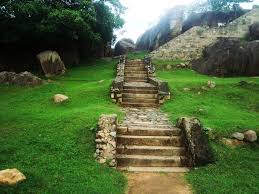
This was originally called Issara Samana Arama and was referred to as Isirimena on the inscription on site. It is also identified in the Vinaya commentary as Issaranimmana. So it is clear that this was the original residence of Minister Aritta of King Devanampiyatissa (307-267 BCE) not the present-day Isurumuniya temple. It is said that the Minister donate his home to 500 noble (Issara) monks headed by himself to dwelt after receiving ordination from the Arahath Tero Mahinda. The chronicle says five hundred commoners (vaisya people) dwelt after obtaining the ordination but does not mention the exact location but in Giri (rocky mountains). So, vaisyagiriya is also a name that now we are calling the Vessagiriya. Inscriptions belonging to the 6-7th centuries are referred to as Bo-Upulvan Kassapagiri Vihara, and in the 10th century, inscriptions are referred to as Isurumenu Bo-Upulvan-Kassapagiri -rad -Maha Vehera.
*Ref-Ancient Anuradhapura/Prof: Anuradha Senevirathna.
The monastery complex was designed and constructed on a landscape where three different levels of beautiful bolder formations spread across a large area in front of the Tissaweva (reservoir). The location seems to have been completed with a suitable architectural design matching the natural rock formation on the ground. It is said that specially design for the monk who did their meditation in search of Nirwana. Today, we could see 23 caves around the area and foundation bricks of some sort of a structure of the comprehensive monastic building. in those days. This complex existed until the Anuradhapura disappeared in the 11th century making a room for hundreds of followers to gain their enlightenment.
Tissaweva Reservoir
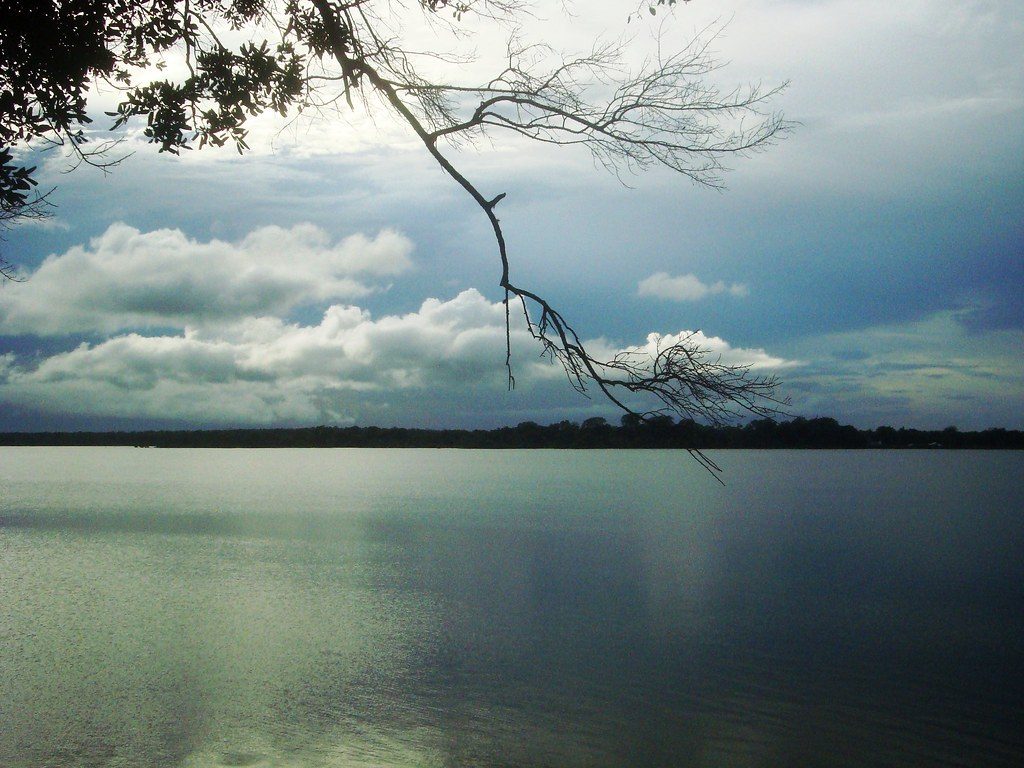
Tissaweva reservoir is one of the oldest in the Anuradhapura period, built during the reign of King Devanampiyatissa (307-267 BCE). A very large stunning tank still in used for cultivation and daily use of people of the Anuradhapura. The reservoir linked with the irrigation network of the country as early as the 5th century CE. The main feeding sources connected with to tank, are traditional Malwatu Oya (river) and the Jayaganga or the Yoda Ela about 87 kilometers long man-made canal, that bringing water from the Kala Weva reservoir. This canal was constructed in the mid the 5th century by King Dhathusena. The reservoir takes an important place in association with traditional rituals since the early days, it says that took place in bathing ceremonies of Kings and in the use of religious ceremonies such as feeding the sacred Bodhi Tree.
The embankment of the reservoir is 2 miles long with 25 feet in height, the surface of the tank covers an area of 550 acres, nearly about 2.23 sq km.
Thuparamaya Monastery
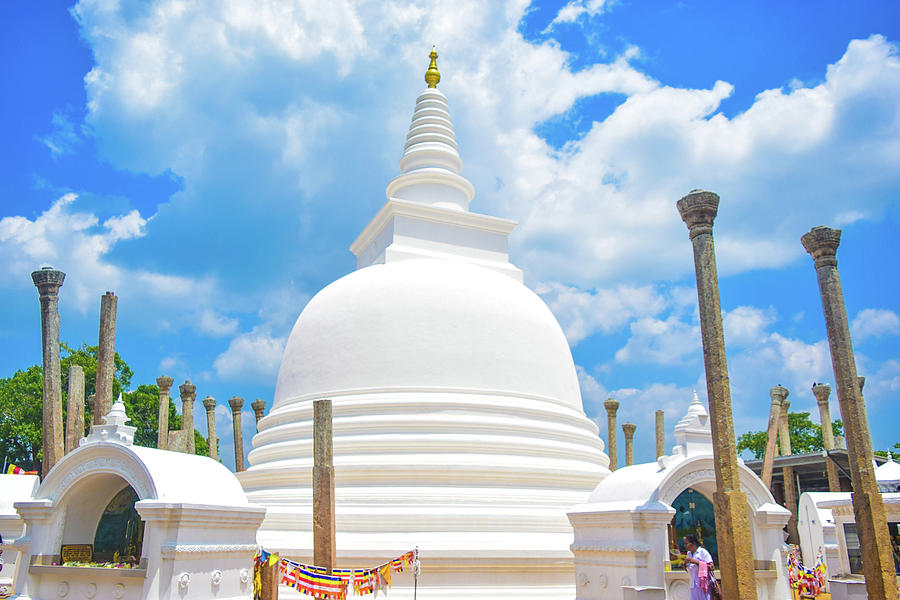
King Devanampiyatissa became a true religious devotee of Buddha. He has built many Buddhist monasteries including this monastery complex with the Thupa (Dhagaba). The chronicle Mahavamsa says that Arahath Mahinda Thero guided the King to reserve land plots to build each important monument in Anuradhapura, including this Thupa, Thero requested King himself to build this Thupa and gift him the right collarbone relic of Lord Buddha to enshrined in the Thupa. According to the tradition, Thupa was originally constructed in the shape of a paddy heap, but it has ruined its original shape after the renovations were completed in 1862 by an archaeological conservation project under the British Monarch. The size of the Thupa is very small in comparison to other mighty Thupas around this. It has a diameter of 18 m at the base and 50 m in height from the bottom level. A Beautiful structure of Watadage (shape of umbrella roofing) was added to the Thupa later during the reign of Kings Vasabha in 65-109 CE where and those ruined stone pillars of that structure can be seen on the site. Thuparama is the first Thupa of all Thupa on the island except 2 Thupas which are Girihandu Saya at Trincomalee and Mahiyangana Thupa. Those 2 built when the Buddha was alive. This sacred Thupa has been renovated, added with extra modifications, and pay respect by various implementations from many Kings until the last years of the Anuradhapura period. The last recode found from the Anuradhapura period is from King Mahinda IV 956-972 CE, who has covered the Thupa with Gold and Silver stripes and replaced a pure Gold door of the Thupa house. Very unfortunate that Thuparamaya was entirely plundered by Chola RajaRaja in the 10th century when they looted the control of the Island. Later, King Parakramabahu I the great restored the Thupa during his reign in the 12th century, who was ruling the country from Polonnaruwa.
South Indian plunders were looted the Thupa in earlier times too, and in the 7th century King Aggabodhi II (608-618 CE), has restored Thupa completely. There is also a record of breaking to open the Relic Chamber to raising money to pay the army of King Dathopatissa I in 643-650 CE.
Basuwakkulama Weva (Reservoir)
The story of the chronicle says that Prince Vijaya arrived at Thambapanni with 700 followers settled down by the river banks such as Malvathu Oya, Kanadara Oya, and Mahavali Ganga, and so on. There is a record in the chronicle that one of their group, a prince called Anuradha built a reservoir on the southern side of the Anuradhapura.
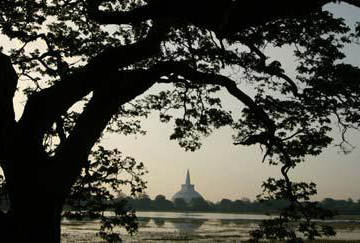
However, the Basuwakkulama weva is one of the oldest known reservoirs built as early as the 4th century BCE by King Pandukabhaya (437 – 367 BCE). The reservoir originally known as Abhayavapi, is given following the King’s name. The tank is located in the midst of the old city and covers an area of 205 acres today.
Mahaviharaya Premises
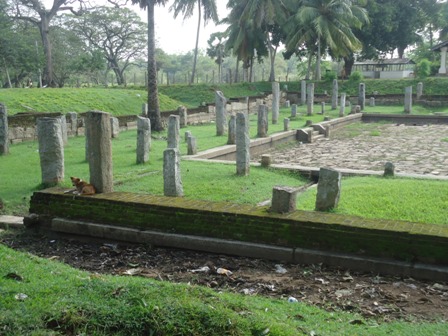
Mahameuna Uyana was the pleasure garden of the Royal family. Very wide forest gardens called Maha Megavana (Thick Jungle) were gifted to the Buddhist Sanga by King Devanampiyatissa during his reign (307 -267 BC). Development of the temple continued regularly, at last, Maha Megavana turned into the Mahameuna Uyana (gardens). Temple named Maha Viharaya (Big temple), became the most powerful religious center of the country influencing political, economic, and socio-cultural relations on the Island. Mahavihara is also the headquarters of the Bikku community in the country and claim that the central body for practicing is to continue the Terawada teachings of the Buddhist world even today. Sri Maha Bodhi Tree, Ruins of Brazen Palace, Ruins of Alms Hall, Ruwanvelimahasaya, Mirisawatiya Tupa, and Tuparamaya temple are some of the places could see today among this ancient Buddhist zone belonging to ancient Mahaviharaya premises.
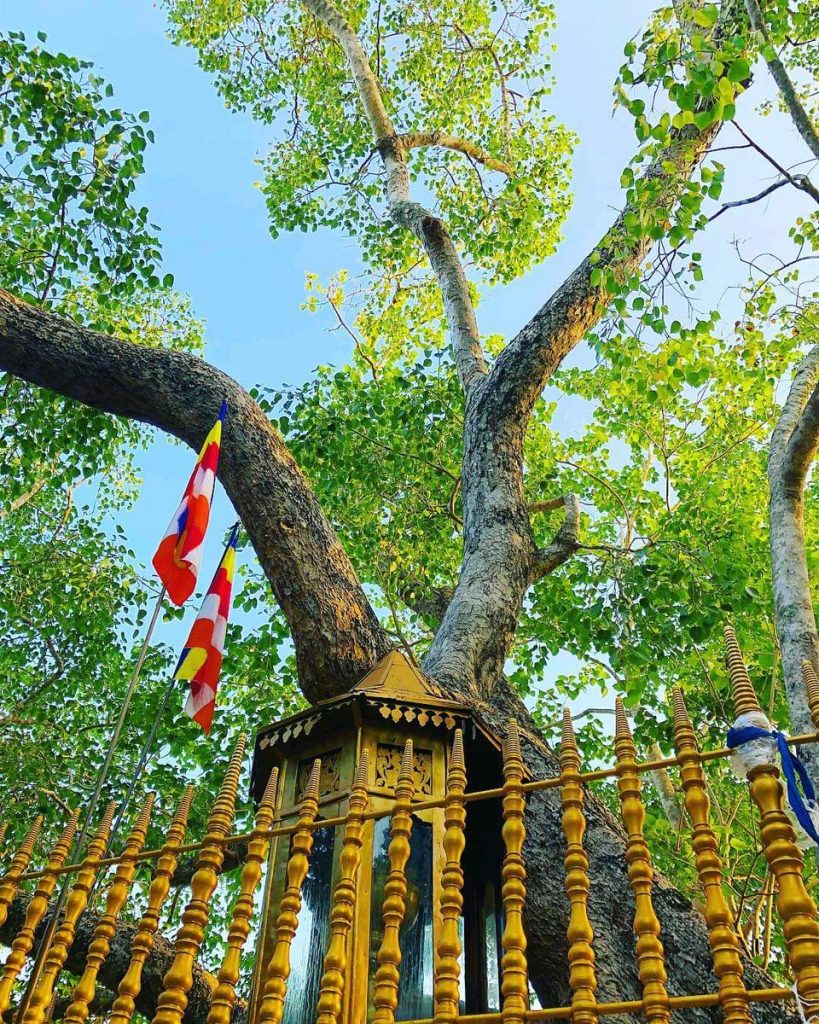
Sri Mahabodhi Tree
SRI-MAHA BODHIYA has been venerated by Buddhist followers around the world since the time Lord Buddha was alive. In the Buddhist tradition, we respect the tree as a sacred tree following the teachings of Lord Buddha. Lord Buddha has ordered his followers to pay respect to this particular Bo-Tree.
This magnificent Bo Tree in Bodhgaya had been given shade to the ascetic Gautam Siddhartha then he was in deep search, looking for total freedom out of all attachments to archiving his final goal to become the Lord Buddha after being spending a billion lives before the last event.
This sapling of the Bo-Tree was brought to Sri Lanka in 288 BCE by Nun. Arahath Sangamittha Tero, the only daughter of Empire Ashok on request of King Devanampiyatissa. This Bo-Tree in Anuradhapura has known as the oldest documented tree in the world today, and the scientific name was given to the Bo-Tree is “Ficus Religiosa” which is subspecies of the Fig family
Ruvanaweli Mahaasaya [Maha Tupa]

The Ruvanwelimahasaya is a Tupa of most important of the Tupa in the world. A Buddhist monument in a special structure enshrined a large number of relics of Lord Buddha. This is the most sacred Tupa of its kind to all Buddhists all over the world.
The Tupa was built by King Dutugemunu in 140 BCE., who he was a warrior King arise from the south of the Island to save the Sinhalese Kingdom from the invader Chola King Elara of south India. He defeated him in war after 40 years of his ruling in the northern parts of the Island. This magnificent Tupa was built to enshrine a large number of relics of Lord Buddha where no other Tupa contained elsewhere in the world.
The Tupa was found ruined in the 19th century and in 1902 Ruvanwelisaya restoration society was formed to carry on restoration work. Completely brick-made structure took long years to restorative, completed the crowning on the 17th June 1940. 103 meters in height and at the bottom circumference of 290 meters, completed very accurately to meet its original structure of water bubble shape. This Tupa is also known by few other names such as “Mahathupa”, “Swarnamali Chaitya”, “Suvarnamali Mahaceti” (in Pali Language), and “Rathnamali Dagaba”.
Two quarts or one Drona of the Gotham Buddha’s relics are enshrined in the stupa, which is the largest collection of his relics.
Brazen Pales
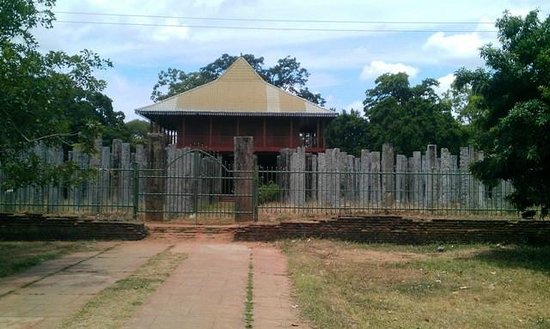
Lovamahapaya is a building situated between Ruvanweliseya and Sri Mahabodiya in the Mahamegavana Gardens. It is also known as the Brazen Palace or Lohaprasadaya because its roof was covered with Bronze tiles.
The building that made for the monks of Mahaviharaya. It was included with a refectory, Uposathagaraya, and also a simamalaka where the Sanga assembled on Poya days to recite the sutra of the confessional.
After the successful war, King Dutugamunu has been work hard to refurbish the Buddhist heritage and he takes the credit for making this building. In the chronicle described as nine story building with a copper roof. The length of one side of the building was 400 ft (120 m). There are 40 rows, each row consisting of 40 stone pillars, for a total of 1600 pillars. According to the chronicle, the building had been constructed on stone pillars. It is believed that it took six years for the construction of the building and the plan was brought from heaven. The building was completely destroyed during the reign of King Saddhatissa (137-119 BCE) by a fire and he reconstructed the building at the height of seven story again.
The small building in the center is lately constructed and is the Venue of Uposatha (chapter house)of the Maha Vihara temple today.
Lankaramaya
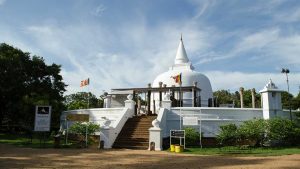
This monastery complex was built by King Walagambahu the Great in the 1st century BCE for remembrance of his lovely consort queen Soma. At this place, where she was jumped down from the horse cart letting King ride faster when the invaders chased after the King. The Arama (monastery) was donated to the Nuns (Bikkuni) later when he became King again.
The present-day shape of the Tupa is a poor renovation mistake that has completely ruined its original Bubble shape. The pillars around Tupa are the evidence of adding an umbrella shape roof up off the Tupa by the later Kings who did renovations.
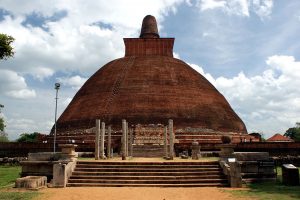
Abayagiriya Maha Viharaya
A massive Buddhist temple started in Anurdhapura with an idea to follow Buddhist teaching in Mahayana ideology. The total area of the complex measured as over 200 hectares including not only the Stupa but also other related areas to the complex. The Giant Stupa is as tall as up to 235 ft in height and its diameter accounts for 310 ft after restoration in recent years. According to the Chinese monk Fa-Xian, there were 5000 student Buddhist monks in this Monastery in the 5th century AD.
Abayagiri Museum
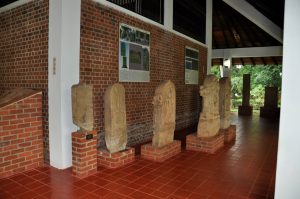
Mahatissa – Faxian Cultural Complex (museum) is located within the Abayagiri monastery complex. It is open to the public from the 13th June 1992 designed by Central Cultural Fund with financial aid from China. Abhayagiri Maha Vihara founded in 1st century BC by King Walagambahu & his religious adviser Ven. Kuppikala Mahatissa Tero (who was monastery chief of Dambulla cave temple). Eventually, Abhayagiriya become a Buddhist University in Asia and many foreign students been doctorates here. Famous Chinese Buddhist Monk Ven. Fa-Xian was studying here from 411 to 412 AD. Abhayagiri monastery complex existed till the 11th century AD. The exhibits displayed in this museum has been discovered during the excavation in the conservation program of the monastery complex.
Eth Pokuna [Elephant Pond]

The old name “Maspota Pond” is believed to have built-in the 3rd century CE for the use of Abhayagiri Monks. Very large tank found in southwest of the Abhayagiri Stupa. The pool has been made out of stones. 150 meters long 50 meters wide and 10 meters in depth bringing water through underground conduits from nearby 2 tanks, Periyakulama and Bulankulama lakes.
Samadhi Buddha Statue
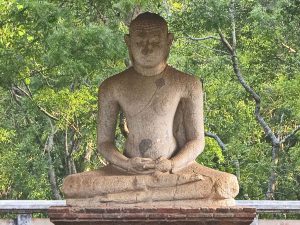
The precious Buddha image situated at Mahamevna Gardens in Anuradhapura is depicted in the position of the Dhyana Mudra (the posture of meditation), associated with his first Enlightenment. This statue is 7 feet 3 inches in height and carved from dolomite marble. It was found in 1886 at the same place. The statue is similar to the statue found in Toluvia, believe to have carved in the same period. Both the Buddha images are very similar to statues from the Gupta period. It is believed that originally the image was gilded and had inlaid eyes made of precious gems. It is likely that it was one of the four statues set around a sacred Bodhi tree shrine. This is the only one that has survived largely intact.
Twin Ponds [Kuttam Pokuna]
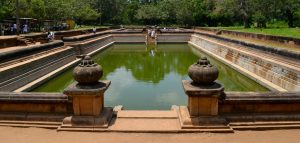
It is believed that this pond had been used by the monks of the Abhayagiriya Viharaya complex. King Aggabodhi [575 – 608AC] takes the credit for making these two beautiful ponds. Both the ponds are looks very similar to each other but there are differences between the two. Simply the lengths are 91 ft in one and the other 132 ft, but the widths are the same as both ponds at 51 ft. And inside the two ponds are different from each other with their depth and the brick stairs for stepping into ponds. It is believed that water circulates regularly from nearby tank, it is possible to see the water supply conduits still at the site
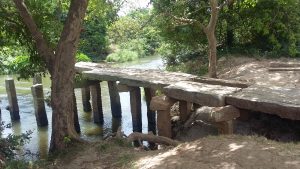
Stone Bridge [ Galpalama]
This bridge existed from the early Anuradhapura period to connect the city with suburbs to cross over the Malwathu Oya. The archeological evidence found that this road connected with the North of the country and the road used to bring the Bodhi Tree from Dambakola Patuna Jaffna.
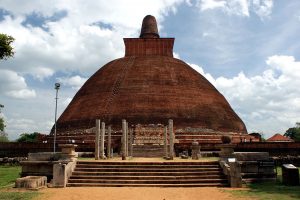
Jethawana Maha Viharaya
This was a monastery complex with a very tall pagoda (Tupa) built by king Mahasen The Great in his reign (273-301 CE). It was 122 meters (400 ft) tall originally and at present after the restoration of abandoned for centuries turned it to 71 meters (232 ft) in height, although yet the largest base platform covering an area of 233,000 m². It also calculated that approximately 93.3 million bricks were used to construct this pagoda.
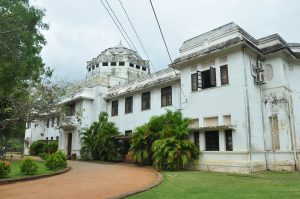
Jethawan Museum
Opened to the public in 1996 and is located within the monastery complex. The building was constructed by the British time for the use of Town Hall in Anuradhapura in 1937. Later identify the importance of a museum for Jethawana Viharaya and converted to a museum to exhibits artifacts and things found at the Jethawana complex. Objects are been display from between the 3rd century BCE to 10th Century AC.
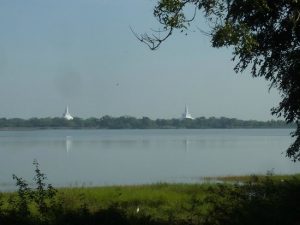
Nuwaraweva (Reservoir)
The largest tank of the three main reservoirs in Anuradhapura The other two are Basawakkulama ( Abayawapi ) and the Tissaweva. Nuwara Wewa is believed to be built by King Vattagamini Abaya popularly known as King Valagamba in the first century BCE. According to H. Parker in Ancient Ceylon (1909), based on the size of bricks used which is similar to bricks in Abayagiriya Stupa, the tank was built in the first 20 years of the 1st century BCE. Based on the bricks again, he believes that repairs were made to the tank in the 3rd Century and again in the 5th Century.
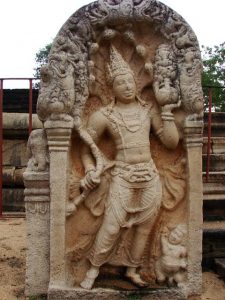
Guard Stone [Mura Gala]
There are a many different types or designs of guard stones. Basically, it stands to represent the given meaning of its name. the psychological impact may have been developed into creative output to impress for protection and prosperity of the building. The one in the picture considers the best in creativity and its meaning of it.
A King Cobra holding a fullpot and a sprouting branch symbolizing the fertility and the prosperity. The theory of Prof. S. Paranawithana, the man is the King from the world of cobra, who is the guardian protector of water bringing the wealth and fortune. And at the bottom by the feet of Cobra King, a figure of dwarf, who represent the god Bahirawa, the lord of the earth. The combination of motifs bringing an artistic value to premises. This guard stone is from the Rathnaprasadha at Abayagiriya Vihara, Anuradhapuraya.
Moon Stone [Sandakada Pahana]

These types of moonstone slab is always associated with the staircases like the guard stones. Guard stones stand on both sides of the entrance way to a building and moonstone welcome the entering entity by letting the first step through to the stairway. While the guard stone disrupts the evil eye, moonstone blesses the entity to reach Nirwana. Half circle slabstone carved out with a meaning of life cycle in this endless universe and shows the way to get rid of the rebirth over and over in different forms. Not all the moonstone bring us the same meaning, time is always taking all away from us and again brings to us all when we are not aware.
Mr. H. C. P. Bell, the founder and Director of the Archaeological Department (1890-1912) express his views about the depiction of this particular moonstone, taking into consideration only the four animals on it and saying that Buddhist temples are open to anyone from anywhere without any boundaries. He may have studied the architecture of Buddhist temples too that always set entrance ways from 4 sides.
Later Prof: Senarath Paranavithana (1931-1934 acting/1940-1956) Director of the Archaeological Dep, gave a comprehensive explanation of the craftsman’s insight represented on this moonstone.
The outer edge of the stone slab is carved with flames, a depiction of flames of desire. Next a caw, a lion, a horse, and an elephant, depiction the constant cycle of birth and death. Next to it are wide border motifs of complicated vine leaves which have closed the way out. And after swans in a line carrying a set of leaves, it depiction the way that the wise could reach freedom by removing each obstacle like Sawan could separate water from the mud. The next line is vine leaves motifs are more clear and thinner, the wise could easily go through the hidden door and could reach Nirwana. The half lotus is the symbol of achievement halfway. To make the full circle you may need to understand it on your own.
Wamana Rupa – Dwarfs
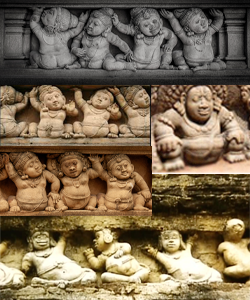
Wamana Rupa is the sculpture of dwarfs. At all types of traditional buildings can find these figures easily. In most cases the bottom line of decorations of the outside of the building could see the dwarf figures. It is believed that they represent the figure of God Bahirawa, who is the lord of the earth. Most of the designers had used the dwarfs figure to hold the building, they designed from the dwarfs’ hands. Lord Bahirawa is the God that looks after the building and the land. He must be happy all the time.
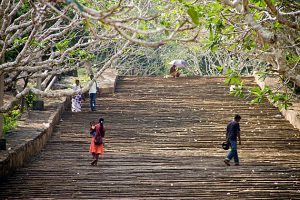
Mihintale Monastic Complex
Known as the cradle of Buddhism in Sri Lanka where had happened the meeting with Local King Dewanampiya Tissa and the Son of Empire Ashoka Arahath Mahinda Tero, the illustrious apostle of Buddhism on a memorable full moon day of June (Poson) in the year 306 BC.
Aukana Buddha Statue
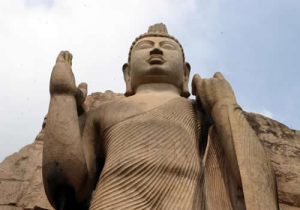
The 5th-century gigantic granite statue considers a patronage by King Dhatusena The Great. Stature is about 42ft tall and in Abaya Mudra or the gesture of fearlessness. Aukana is 48km south of Anuradhapura City in Anuradhapura District. This is the finest granite sculpture found in its type stature in Sri Lanka.
Kala Weva Reservoir

King Dathusena the Great [455-473AC] built this reservoir, which has a circumference of over 65 kilometers and covers an area of roughly 18 square kilometers. The wan doratuwa or the spill gate is about 66 meters tall and 52 meters wide. The spill gate was built with hammered granite blocks each shaped to fit its neighbor with such accuracy that they act as a single solid rock. After completion of Kala Wewa, King Dhatusena initiated work on another tank, Balalu Wewa, adjoining Kala Wewa. He then proceeded to join the two tanks giving rise to one of the largest reservoirs in history, the Kala Balalu Wewa.
In addition to the tanks, King Dhatusena constructed the Yodha Ela (Canal). This 87 kilometers long canal was built to transport water from the Kala Wewa to the capital city of Anuradhapura. Thus, the Yodha Ela feeds the Abhaya Wewa, Tissa Wewa, and Nuwara Wewa situated in Anuradhapura, while a branch of the Ela feeds the Nochchaduwa Reservoir. The Yodha Ela has a precise gradient of six inches per mile; an engineering feat that baffles even engineers armed with today’s technology
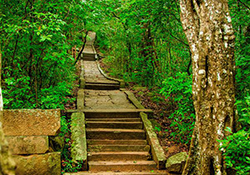
Ritigala Monastery and Ritigala Woods
****coming soon ****
By Eranga Suneth Jayasinghe